When property managers think about routine building maintenance, window cleaning, pressure washing, waterproofing, and exterior repairs are often at the top of the list. One critical system, however, can be easy to overlook because it sits largely out of sight: your building’s roof anchors and davit systems.
These systems play an essential role in providing safe access for window cleaning, exterior maintenance, restoration, and other high-access work. Like any safety-related building component, they require routine inspection, proper documentation, and periodic certification.
For commercial property owners and facility managers, staying ahead of roof anchor and davit inspections can help protect workers, reduce liability, prevent service delays, and keep building maintenance programs running smoothly.
What Are Roof Anchors and Davit Systems?
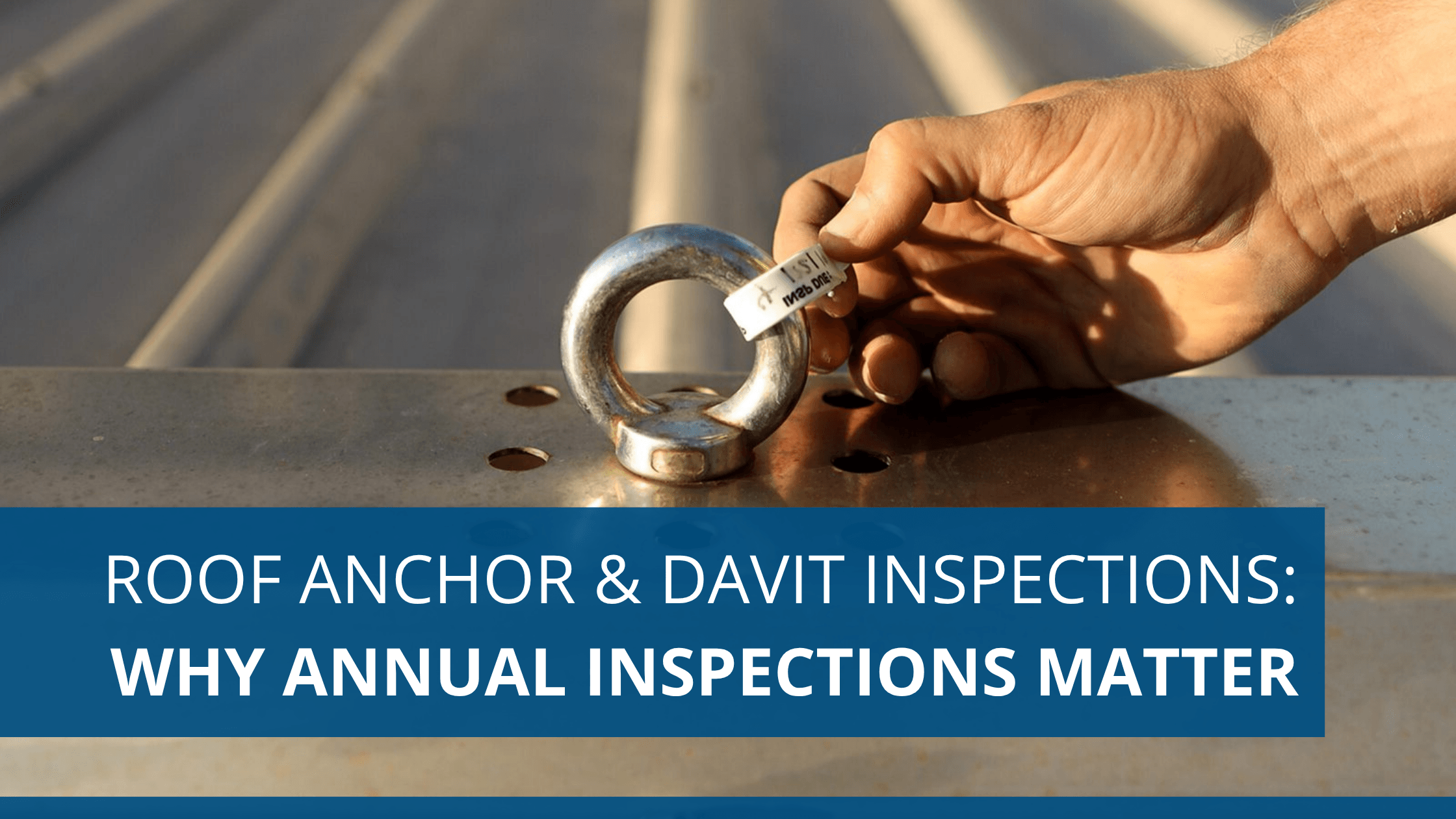
Roof anchors are permanent attachment points installed on a building that may be used as part of a rope descent or fall protection system.
Davit systems typically consist of bases and removable or permanent arms designed to support suspended access equipment. They are commonly found on commercial buildings, office towers, high-rises, healthcare facilities, campuses, and other properties that require exterior maintenance at height.
These systems may support work such as:
Commercial window cleaning
Exterior façade maintenance
Waterproofing and sealant work
Building inspections
Pressure washing
Restoration and repair
Other high-access maintenance
Because workers may rely on these systems while operating many feet above ground level, regular inspection is more than a maintenance best practice.
It is an important part of building safety.
How Often Should Roof Anchors Be Inspected?
For rope descent system anchorages covered by OSHA’s general-industry standard, the information provided by a building owner must be based on an annual inspection by a qualified person.
OSHA 29 CFR 1910.27(b)(1) also requires the building owner to inform the employer in writing that applicable anchorages have been identified, tested, certified, and maintained so that each anchorage is capable of supporting at least 5,000 pounds in any direction for each employee attached.
Certification must be performed by a qualified person as necessary and at least every 10 years.
That distinction is important.
An annual inspection and a full certification or recertification are not necessarily the same service. Annual inspection helps identify developing problems and verify the current condition of the system, while certification may involve additional evaluation, testing, engineering documentation, or load testing based on the system and applicable requirements.
Why Annual Anchor Inspections Matter
1. Safety Conditions Can Change
Roof anchors and davit systems are exposed to demanding conditions.
Weather, water intrusion, corrosion, roof work, construction activity, building movement, and normal wear can affect the condition of components over time.
Even a system that previously passed inspection should not automatically be assumed to remain in the same condition year after year.
Routine inspections give a qualified professional an opportunity to identify visible deterioration, damaged components, loose connections, corrosion, modifications, or other conditions that may require additional evaluation.
2. Documentation Matters
Property managers frequently coordinate work with window cleaning companies, maintenance contractors, restoration crews, and other service providers that may rely on building access systems.
Before covered rope descent systems are used, contractors need appropriate information from the building owner confirming that the anchorages satisfy applicable requirements.
Maintaining organized inspection and certification records makes it easier to provide that documentation when needed.
It can also prevent a maintenance project from being delayed because the contractor cannot verify whether an anchorage is approved for use.
3. Inspections Can Reduce Liability
Fall protection systems are safety-critical building components.
If inspection records are outdated, missing, or incomplete, a property owner can face unnecessary exposure if there is an accident or question regarding whether the system was properly maintained.
A structured inspection program demonstrates that roof-access safety is being actively managed rather than addressed only when a contractor needs to access the building.
4. Problems Are Easier to Address Before Work Begins
One of the worst times to discover an anchor problem is when a crew is already scheduled to perform exterior work.
An inspection may reveal:
Corrosion
Damaged or missing components
Loose hardware
Deterioration around mounting locations
Changes to the roof or surrounding structure
Improperly labeled anchors
Missing documentation
Equipment requiring additional testing or repair
Finding these issues early gives the property management team time to evaluate repairs, schedule testing, or update documentation before another project depends on the system.
Annual Inspection vs. Roof Anchor Certification
The terms inspection, testing, and certification are sometimes used interchangeably, but they can represent different steps.
Annual Inspection
An annual roof anchor inspection generally evaluates the visible condition and continued suitability of the anchorage system.
The inspection may include review of items such as:
Anchor condition
Davit arms and bases
Attachment points
Signs of corrosion
Visible damage
Identification or labeling
Surrounding roof conditions
Previous inspection or certification information
Testing and Certification
Certification provides a more comprehensive verification that the system meets applicable performance requirements.
Depending on the system, building conditions, previous records, renovations, or applicable standards, this may include load testing or additional engineering evaluation.
Under OSHA’s rope descent system requirements, certification must occur as necessary and at least every 10 years.
Additional evaluation may also be appropriate after significant building or roofing work, modifications to the system, damage, or other changes that could affect the anchorage.
What Happens During a Roof Anchor and Davit Inspection?
Every property is different, but a professional inspection process typically begins with a review of the building and existing access system.
The inspector may review the location and type of anchors, davit bases, davit arms, available documentation, equipment condition, and any changes that have occurred since previous testing or certification.
When required, additional testing can be performed to verify system performance.
Following the inspection, property management should receive documentation identifying the systems reviewed, inspection results, and any recommendations for repairs, testing, recertification, or future maintenance.
Clear documentation is particularly valuable for properties that work with multiple maintenance vendors throughout the year.
When Should Property Managers Schedule an Inspection?
If you manage a building with permanent roof anchors or davit systems, the inspection date should be part of your annual preventive maintenance calendar.
You should also review the system when:
The annual inspection date is approaching
Inspection or certification records cannot be located
The roof has recently been replaced or modified
Exterior renovations have taken place
Anchor components appear damaged or corroded
A maintenance contractor requests current documentation
Building ownership or management has recently changed
The system has not been professionally evaluated in several years
Waiting until a high-access project is already scheduled can create unnecessary delays.
Planning inspections proactively helps ensure that maintenance crews have the documentation and access systems they need when work begins.
Protect Your Building and the People Who Maintain It
Roof anchors and davit systems may represent only a small portion of a commercial building, but they play an important role in maintaining the entire property.
Keeping those systems properly inspected, documented, tested, and certified can help property managers support safer working conditions while avoiding interruptions to window cleaning, restoration, waterproofing, and other exterior maintenance.
City Wide Building Services provides professional davit and anchor inspection and certification services for commercial and high-rise properties. Services include annual visual inspections, anchor and davit system evaluations, load testing and certification when required, compliance documentation, and ongoing inspection programs.
If your annual inspection is coming due, or you’re unsure when your building’s anchors were last evaluated, now is a good time to review your records.
Schedule a roof anchor and davit inspection with City Wide Building Services and make sure your building is ready before the next high-access project begins.
 Dallas: 214-358-4547 Houston: 346-201-5999
 sales@citywidebuildingservices.com